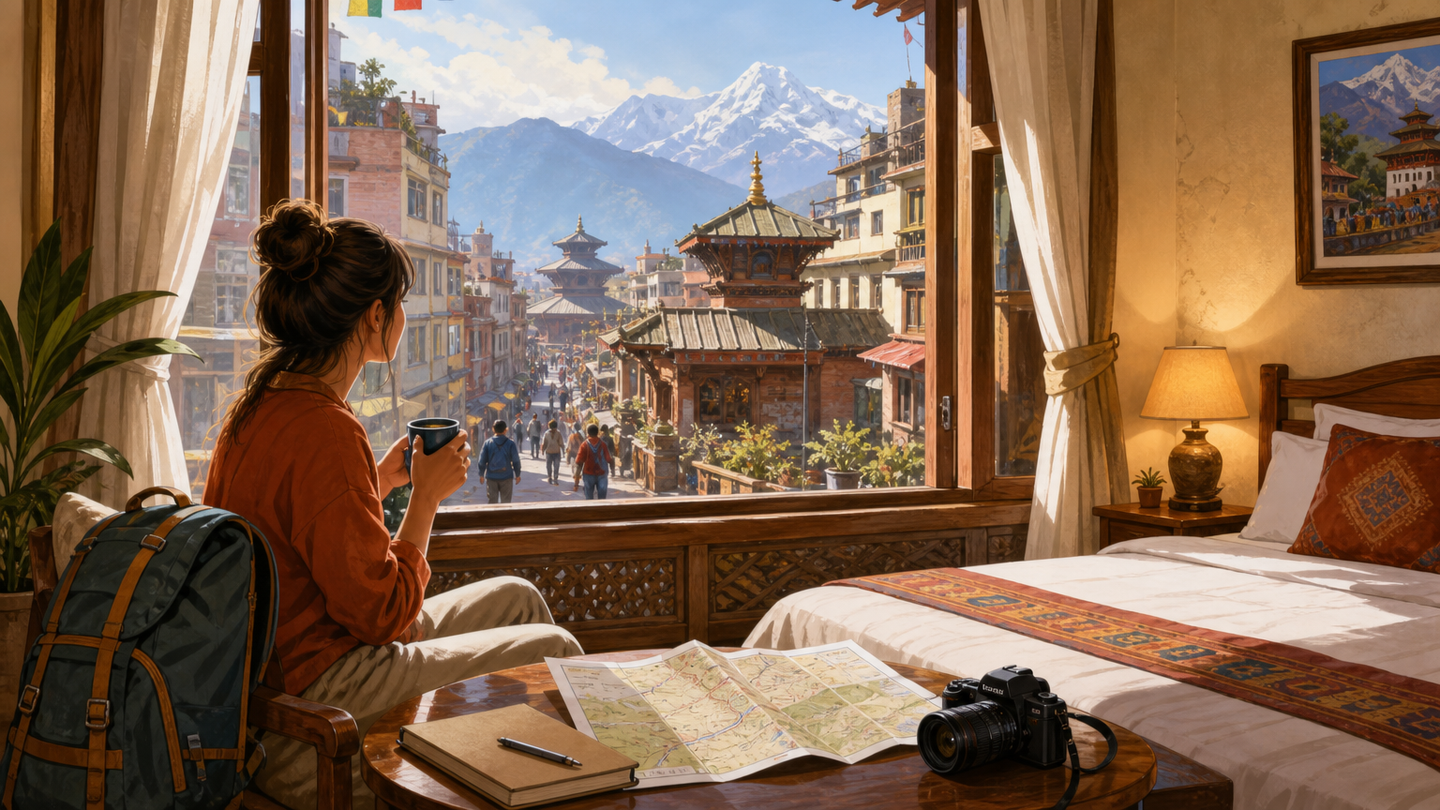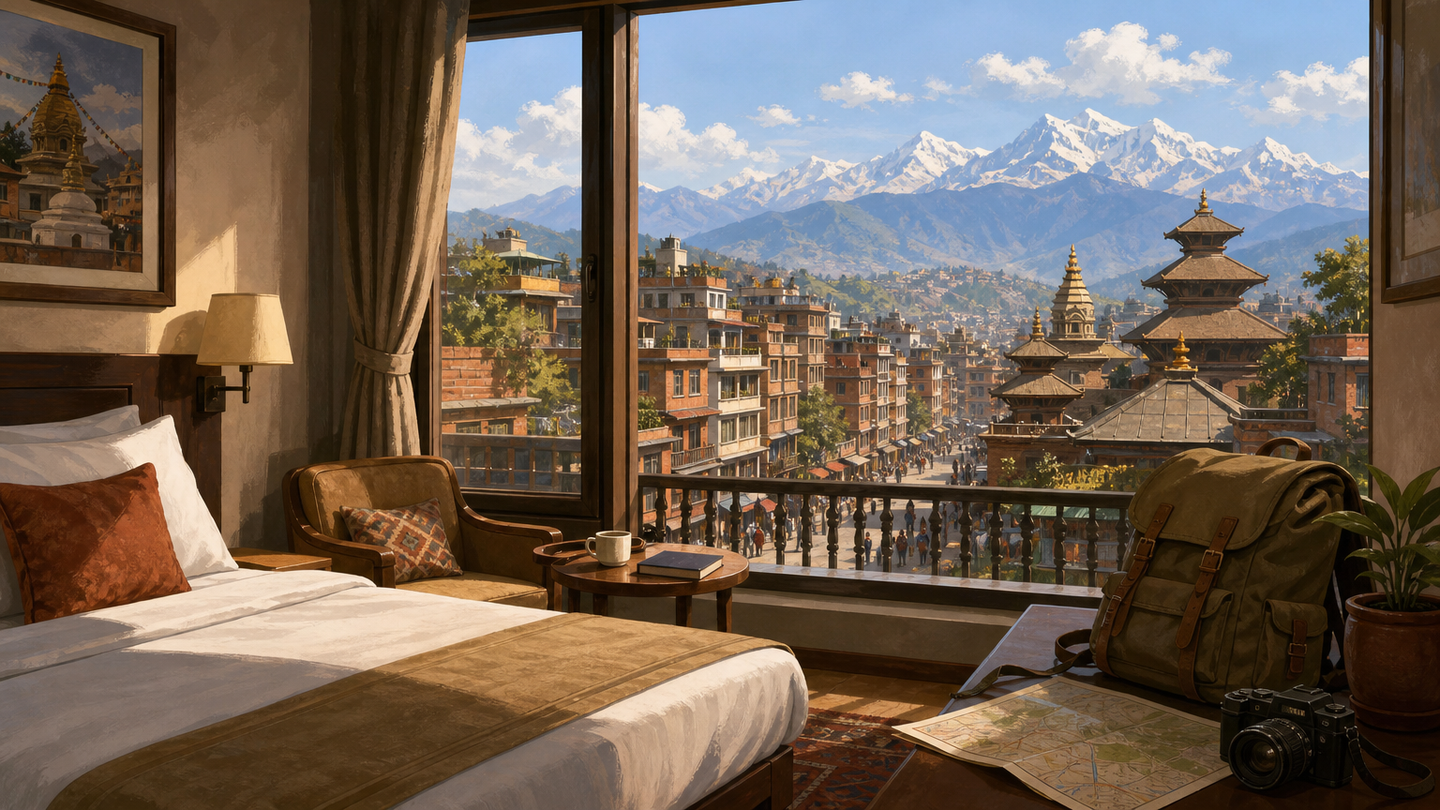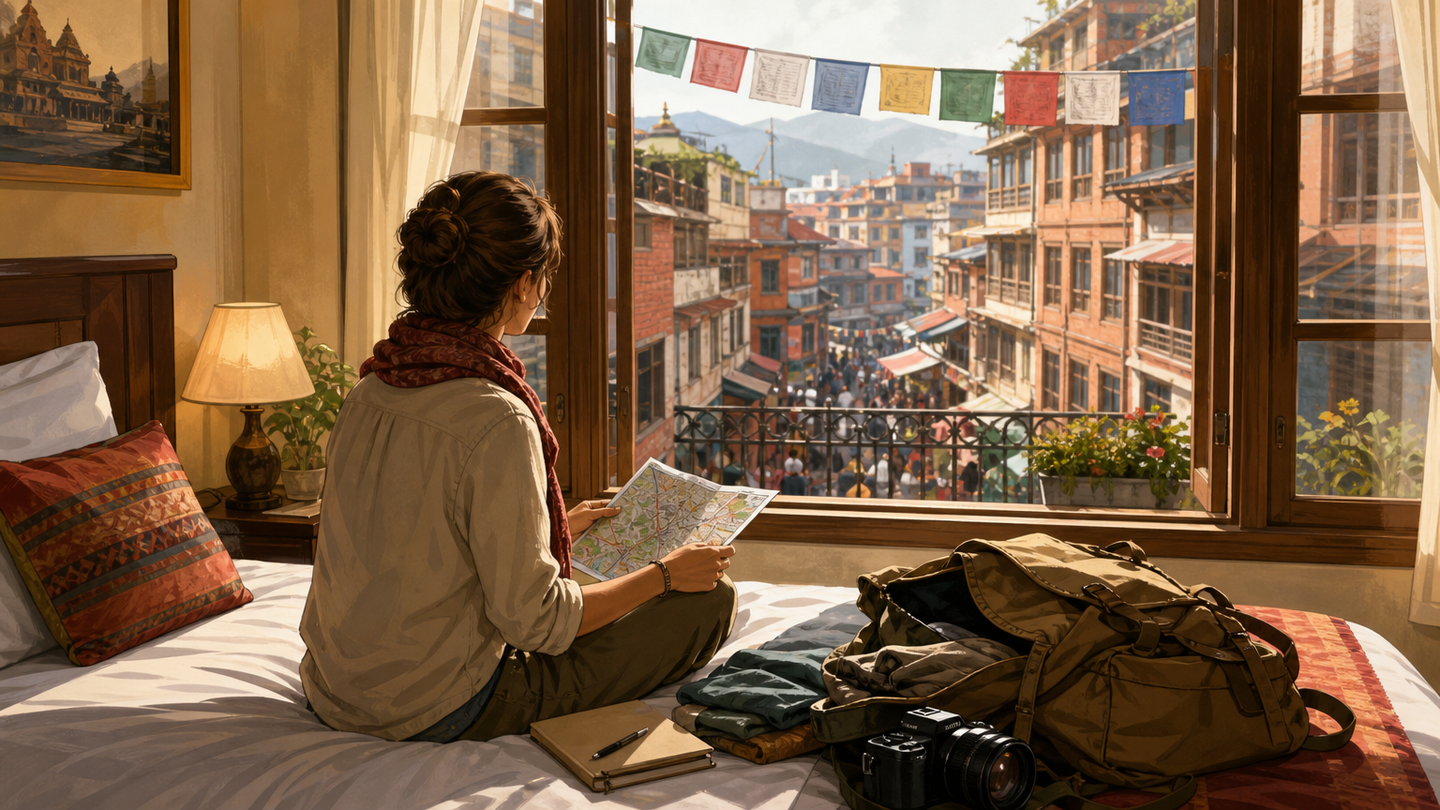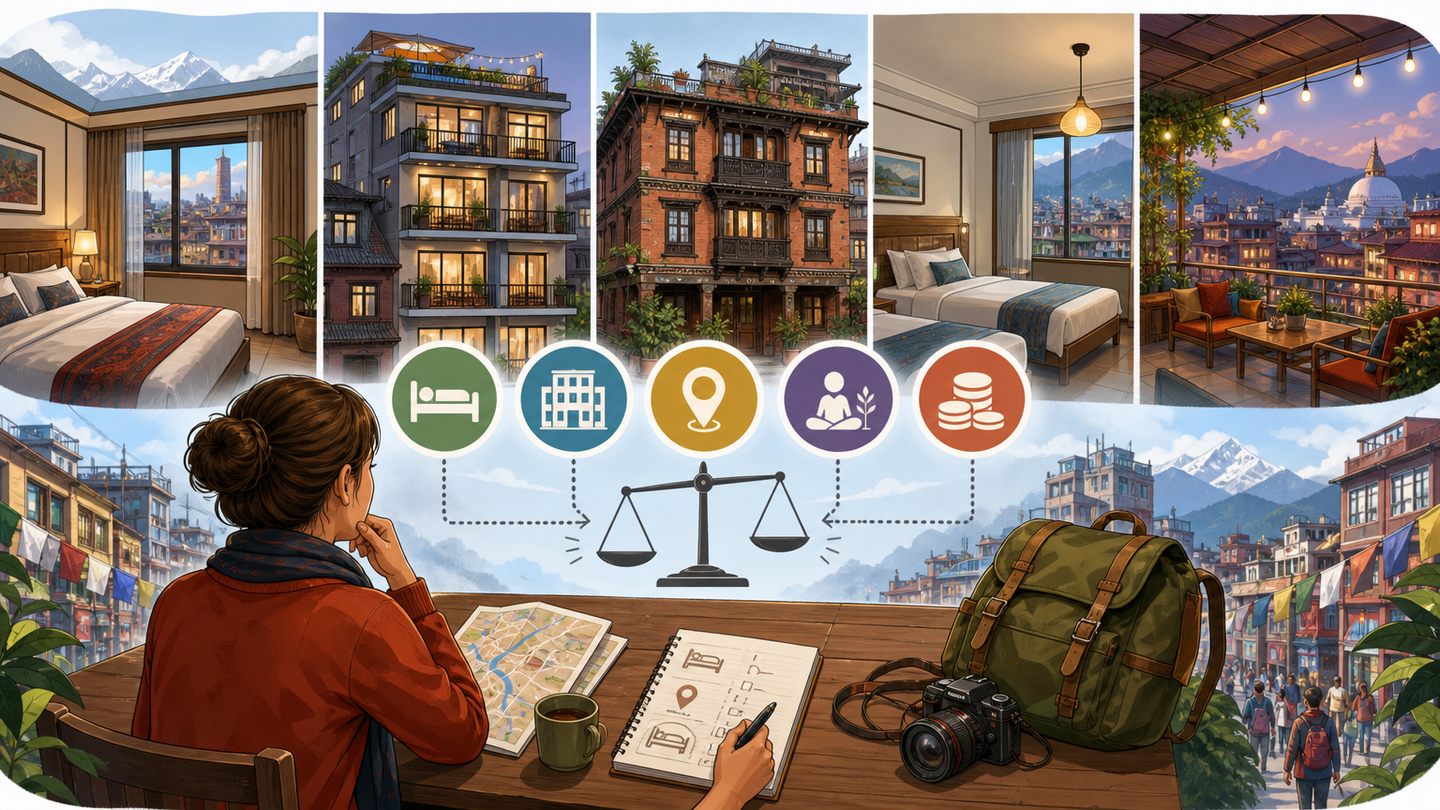
Thamel is Kathmandu’s tourist district, with a dense mix of hotels and other visitor-focused businesses. That concentration gives travelers plenty of possible places to stay, but it also makes a quick choice difficult. Two properties can appear similar in a listing yet offer very different room arrangements, atmosphere, privacy, and suitability for the way you plan to spend your time in Kathmandu.
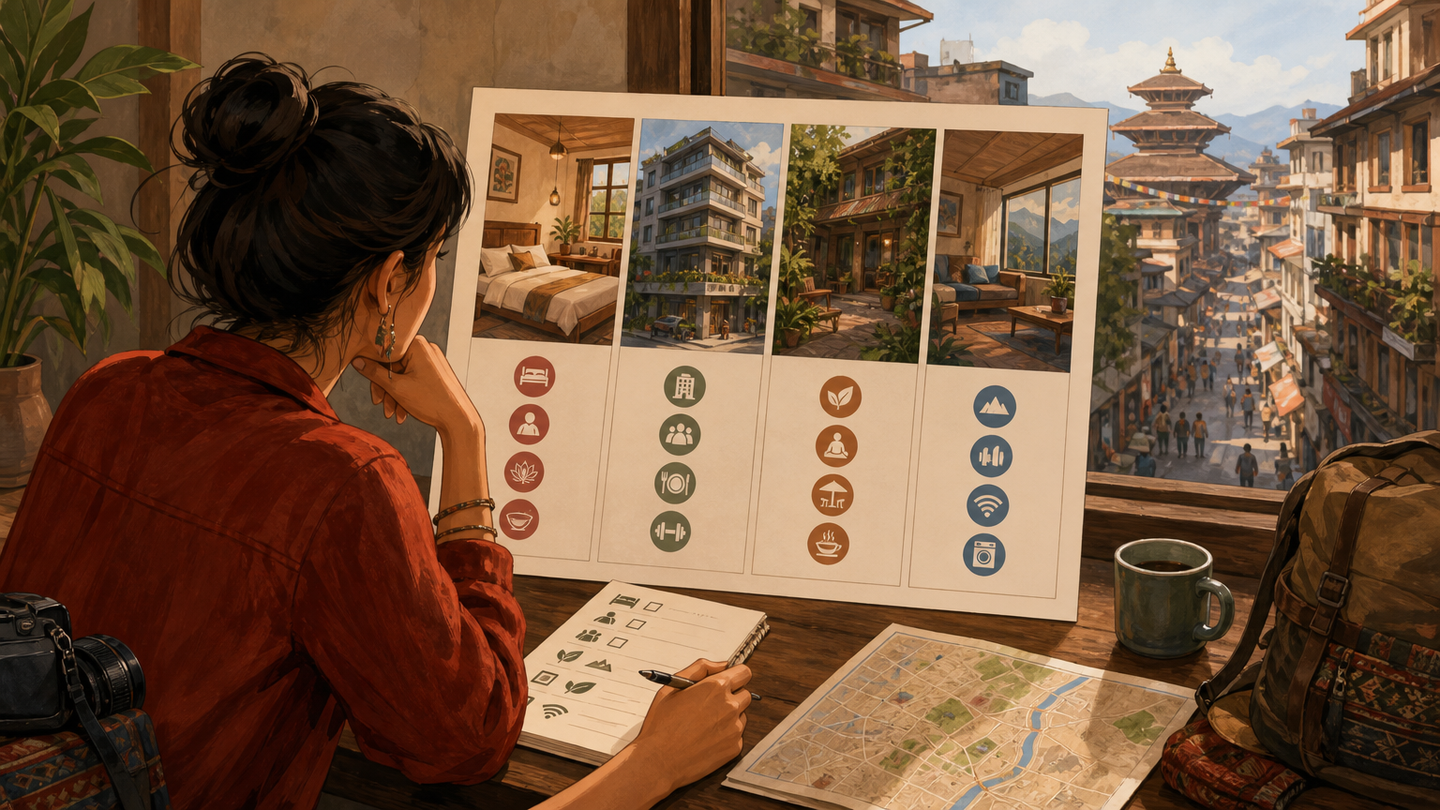
The useful question is not which accommodation is best in general. It is which one supports your own priorities: a private place to rest, a sociable base, a simple room close to visitor services, or a lodging choice that fits a more considered style of travel. Comparing a short list through the same categories will make the differences clearer.
Start with the stay style that suits your trip
Begin by deciding what role the accommodation needs to play. A traveler spending most days exploring Kathmandu may value an uncomplicated base and a room that meets essential needs. Someone arriving for work, recovering from travel, or planning long periods in the room may put more weight on personal space, a quiet setting, and the features of the room itself.
In Thamel, compare hotels, smaller lodges, and hostel-style properties as different stay formats rather than as interchangeable labels. A conventional hotel may suit travelers who want a more self-contained experience. Smaller lodging can be appealing when a modest, straightforward stay is the aim. Hostel-style accommodation can fit travelers who prioritize a shared setting or a lower-key room arrangement, but the room configuration deserves particular attention.
Bathroom access is one of the most important distinctions. In smaller hostelries, communal bathrooms may be provided unless a private bathroom is specifically stated. Do not assume that a room is ensuite because it is described as private; a private sleeping room and a private bathroom are separate features. If this matters to you, make it a firm comparison point rather than a minor preference.
Compare the room and building experience
Once you have identified the appropriate stay format, compare what you will actually use. Make a simple side-by-side note for each property: room type, bed arrangement, bathroom arrangement, shared or private spaces, and any services that matter to your routine. This prevents attractive photographs or a broad property description from obscuring a detail that affects comfort every day.
Think about privacy in layers. A private room can still sit within a busy building, while a shared-room option may be exactly right for a traveler who wants more interaction. Likewise, a private bathroom can make a meaningful difference to convenience, particularly for travelers who prefer not to coordinate their routine around shared facilities.
Be equally clear about what is essential and what is merely pleasant. A traveler whose priority is a dependable place to sleep may accept a simpler room in exchange for location or a particular atmosphere. Another may decide that a more private room arrangement is worth making the central selection criterion. Neither choice is inherently better; the right balance depends on how you expect to use the stay.
Weigh location against quiet and convenience
Thamel’s identity as Kathmandu’s tourist district is part of its appeal. Staying there places you amid a concentration of visitor-oriented businesses and the activity that comes with them. For travelers who want their lodging woven into the neighborhood experience, this can be a strong reason to choose Thamel rather than treating the hotel as a retreat apart from the city.
At the same time, a busy district asks you to consider your tolerance for activity. Look beyond the name of the neighborhood and compare the immediate setting described for each property. Consider whether you want to step directly into the liveliest part of Thamel or prefer a lodging choice that feels more removed from the district’s late-night bustle. This is not a matter of one location being universally superior; it is a tradeoff between immediacy and the kind of rest you want at the end of the day.
The neighborhood can also work well as a base for city sightseeing. Kathmandu Durbar Square, also called Basantapur Durbar and Hanuman Dhoka, is one of the city’s notable sightseeing locations. More broadly, Kathmandu Valley includes seven monument zones within its World Heritage property. A traveler focused on cultural sightseeing may therefore favor a stay that makes moving around central Kathmandu feel manageable, while still choosing a room setup that supports recovery between outings.
Use standards and clear questions to decide
Accommodation labels and promotional descriptions are useful starting points, but they should not replace a direct understanding of the particular room being reserved. Nepal’s tourism framework provides for hotels, lodges, restaurants, resorts, and bars to register as tourist-standard businesses when they meet prescribed requirements, and it provides for hotel classification. The Department of Tourism also publishes hotel-standard material.
That context can help you understand why terms such as hotel, lodge, and tourist-standard property may appear in accommodation descriptions. It does not make every individual listing identical, nor does it answer the practical question of what a specific room includes. Treat the property’s stated room details, bathroom arrangement, and booking terms as the features that determine whether the option fits your trip.
A focused comparison is more useful than a long, unfocused list. For each contender, identify the answer to the same core questions:
- Is the sleeping arrangement private or shared? – Is the bathroom private or communal? – Does the building atmosphere match your need for quiet, activity, or social contact? – Does the location within Thamel suit the way you want to experience the district? – Is the accommodation’s description clear about the room you are choosing?
If an answer is vague, avoid filling in the gap with an assumption. A concise clarification can prevent a mismatch between the stay you pictured and the one you receive.
Match the accommodation to your priorities
For a traveler who values ease and privacy, a hotel room with a clearly stated private bathroom may be the strongest fit. For someone content with simpler arrangements, a lodge or smaller property can be appropriate when its room and bathroom details match expectations. For a traveler who wants a shared environment, hostel-style lodging may be the better match, provided the room configuration and communal facilities are comfortable for the length of stay.
Location preferences can break a close decision. Choose a property positioned for immediate immersion in Thamel when access to the district’s visitor-oriented activity is a central part of the stay. Choose a setting that appears more removed from the busiest surroundings when rest is likely to matter more than being in the middle of the action.
There is also room to consider how your booking connects to the place you are visiting. Choosing locally owned hotels or lodges where possible can support local livelihoods, while respectful conduct helps make tourism beneficial to both visitors and the community.
The best Thamel accommodation is the one whose room arrangement, privacy level, setting, and travel style align without forcing you to compromise on what matters most. Before finalizing a booking, confirm the property’s current room details and terms directly, since individual accommodations can change.
Information may contain errors, omissions, or outdated details. Confirm time-sensitive information with the relevant official or authoritative source.