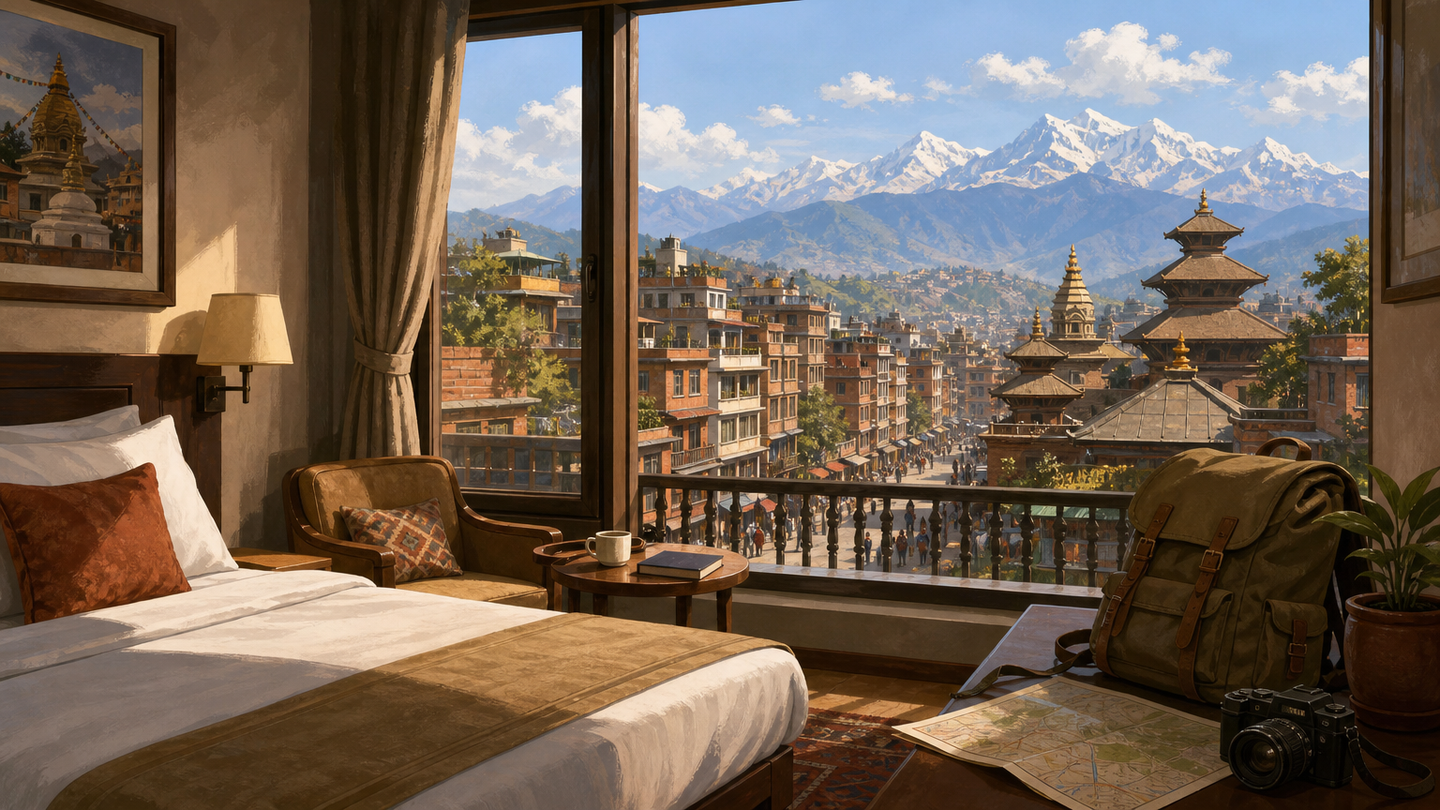
Thamel is Kathmandu’s tourist district: a compact visitor-oriented area with scores of hotels and related businesses. That concentration makes it a practical place to base a stay, but it also means that the word “accommodation” covers a wide range of experiences. A good choice begins with deciding what you need from the room, what you want from the neighborhood, and which details must be clear before you arrive.
Why Thamel works as a Kathmandu base
Kathmandu is Nepal’s largest city and its political and cultural capital. Within it, Thamel brings together lodging and visitor services in one well-known district. For travelers who want to stay in an area shaped around tourism, this can simplify the basic task of finding a place to sleep while remaining in the city.
The neighborhood has an active character late into the night. That atmosphere may suit a traveler who values being in the middle of a lively part of Kathmandu; it may be less suitable for someone whose first priority is a quiet room. Rather than assuming every address will feel the same, treat the precise location of a property and the room’s position within it as part of the accommodation decision.
Thamel can also serve as a starting point for exploring Kathmandu’s city sights. Kathmandu Durbar Square—also called Basantapur Durbar and Hanuman Dhoka—is a city sightseeing location, while the Kathmandu Valley World Heritage property includes seven monument zones. A stay in Thamel can therefore be paired with time devoted to the wider cultural landscape of the valley, not just the neighborhood itself.
Choosing a stay that fits your trip
Start by defining the role your accommodation needs to play. Some travelers mainly need a simple base between days in Kathmandu. Others may place more value on a private room, a particular bathroom arrangement, a calmer setting, or extra room to settle in. The right choice is not a universal category of hotel; it is the property whose room setup and location match the way you expect to use it.
In Thamel, the distinction between a hotel, lodge, guesthouse, and smaller hostelry matters less than the details of the actual room. Nepal Tourism Board notes that smaller hostelries can have communal bathrooms unless a private bathroom is stated. If a private bathroom is essential, make that a non-negotiable part of the booking description rather than an assumption based on the property’s name or photographs.
Think about your tolerance for neighborhood activity, too. A room can be convenient for nearby visitor-oriented businesses without necessarily offering the same degree of separation from the district’s nighttime energy. Ask how the room is situated—particularly if uninterrupted rest is important to your trip—and choose the setting that aligns with your priorities.
There is also value in considering the kind of business you wish to support. Nepal Tourism Board encourages travelers, where possible, to use locally owned hotels and lodges as a way of supporting local livelihoods. This does not require a particular type of stay; it simply gives travelers one meaningful factor to include alongside comfort, room configuration, and location.
Practical details to settle before booking
A clear accommodation description is more useful than a broad label. Confirm the room type, the bathroom arrangement, and the facilities that are important to you personally. If accessibility, a particular sleeping arrangement, or a quieter room is central to your plans, request a direct answer before relying on it. These details can vary from one Thamel property to another.
Nepal’s tourism framework provides for hotels, lodges, restaurants, resorts, and bars to be registered as tourist-standard businesses when they meet prescribed requirements. It also provides for hotel classification under prescribed standards, and the Department of Tourism publishes hotel-standard material. This is useful context for understanding that tourist accommodation operates within a formal framework. Still, a general standard or category should not replace checking the particular room and services you intend to use.
Keep the practical questions focused. Establish what is included with the room, whether the bathroom is private or communal, and whether the property can meet any essential needs you have communicated. A written confirmation of the items that matter most gives you a clearer basis for selecting among stays that otherwise appear similar.
Putting your Thamel stay to use
Once you have chosen an accommodation that suits your priorities, use Thamel as a base rather than treating it as the whole of Kathmandu. Its visitor-oriented setting can make it a natural place to begin and end the day, while Kathmandu Durbar Square offers one city sightseeing destination beyond the district. The seven monument zones of the Kathmandu Valley World Heritage property also place a Thamel stay within a much wider cultural setting.
The best lodging choice is one that supports the rhythm of your own visit: a room arrangement you understand, a location whose atmosphere feels appropriate, and a stay that leaves you ready to experience Kathmandu on your terms. Before finalizing any reservation, confirm the property’s current room details and booking terms directly with the accommodation.
Information may contain errors, omissions, or outdated details. Confirm time-sensitive information with the relevant official or authoritative source.