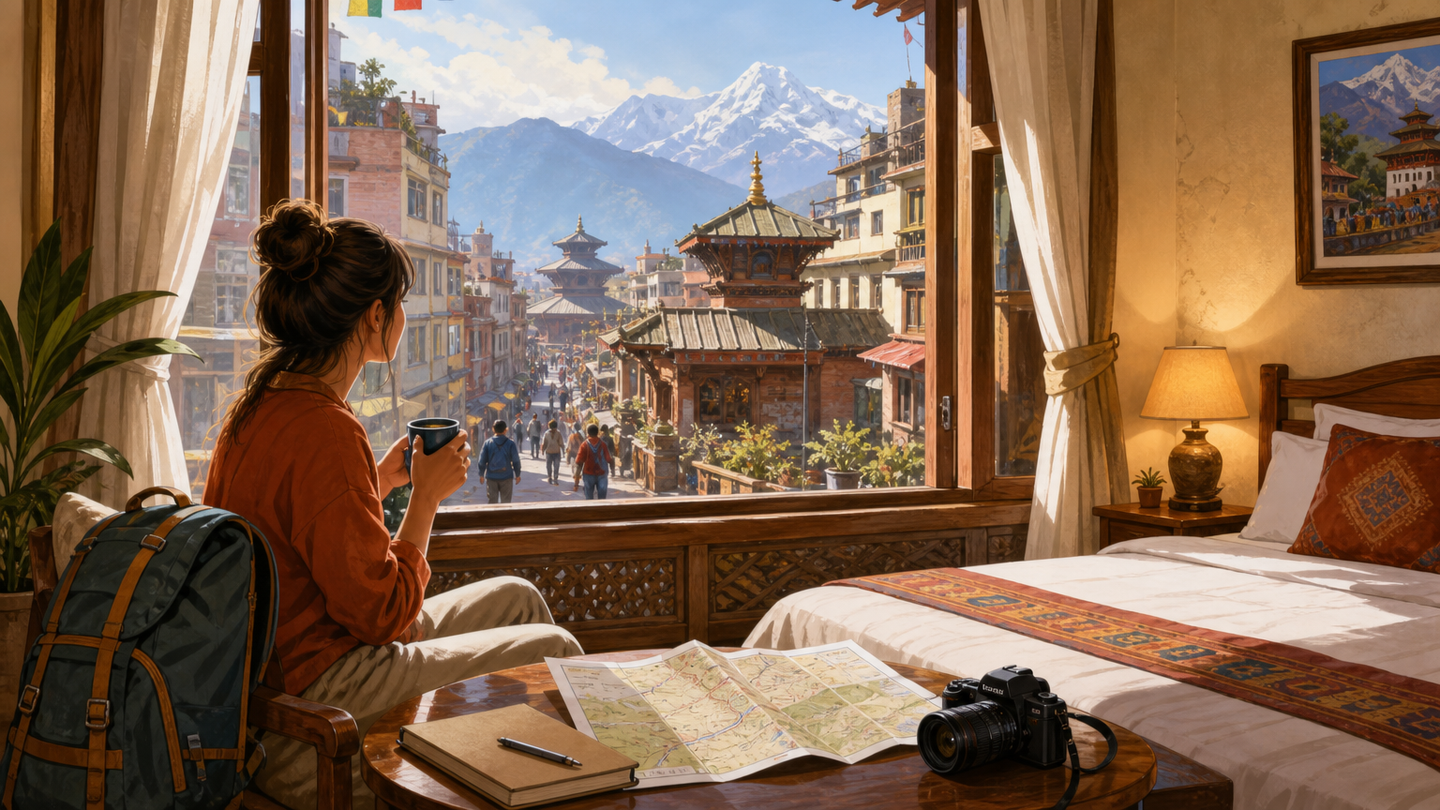
Choosing a first place to stay in Kathmandu can feel like a major decision, especially when you want a convenient base without losing the character of the city. Thamel makes that choice easier for many visitors. As Kathmandu’s tourist district, it brings together a large concentration of hotels, lodges, and visitor-focused businesses in one lively area. It is a practical place to arrive, settle in, and begin exploring the city.
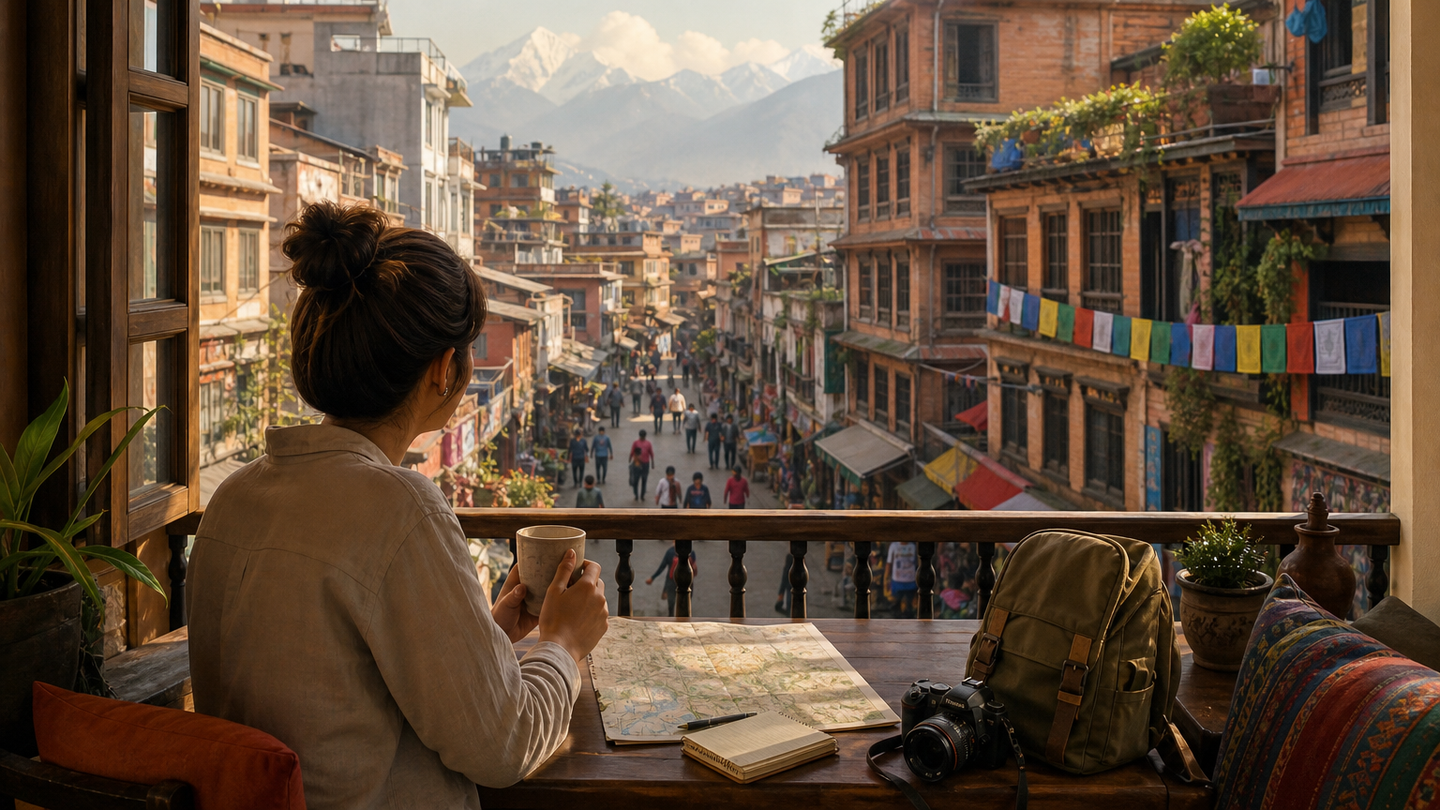
Thamel is not a single, uniform hotel zone. Accommodations range from smaller hostelries to more established hotels, so the best first stay depends less on finding a universally “best” property and more on knowing what matters to you: a private bathroom, a quieter room, an easy arrival, or a locally rooted place to stay.
Why Thamel Is a Useful First Base
Kathmandu is Nepal’s largest city as well as its political and cultural capital, and Thamel sits within its visitor-oriented heart. Staying here puts you in a district shaped around travelers’ everyday needs. The neighborhood is active late into the night, with hotels alongside restaurants and other businesses used by visitors.
For a newcomer, that concentration can remove some friction from the first days of a trip. Rather than treating the hotel only as somewhere to sleep, think of it as your base for orienting yourself: a place to return to between outings, to ask for practical help, and to begin getting a sense of Kathmandu’s pace.
Thamel can also work well for travelers who want city sightseeing to be part of their stay. Kathmandu Durbar Square—also called Basantapur Durbar and Hanuman Dhoka—is one of the city’s notable sightseeing locations. More broadly, the Kathmandu Valley World Heritage property includes seven monument zones, giving a stay in Kathmandu a strong cultural context beyond the immediate neighborhood.
Before You Book: Match the Stay to Your Priorities
Begin by deciding what “comfortable” means for your trip. A smaller lodging can be a good fit for someone who values a simple, close-to-the-neighborhood experience. A hotel may suit a traveler who wants a more conventional room setup and a clearer separation between the energy of Thamel and time spent resting.
The room description deserves close attention. In smaller hostelries, a communal bathroom may be part of the arrangement unless a private bathroom is specifically stated. Do not assume that every room has the same facilities simply because it is in the same building. If a private bathroom matters to you, make it a non-negotiable booking detail rather than a preference you hope will work out on arrival.
It also helps to distinguish between the neighborhood and the room. Thamel’s atmosphere is part of its appeal: it is busy, social, and active. A traveler who wants to step directly into that energy may prefer a central location. Someone who values a calmer end to the day may want to ask how a particular room is positioned within the property. The right choice is personal; lively surroundings are a benefit for some guests and a trade-off for others.
Nepal provides for tourist-standard registration and classification of hotels when prescribed requirements are met, and hotel-standard material is published by the country’s tourism authorities. That framework is useful context, but it should not replace your own attention to the details of the room and stay you are considering.
What to Expect When You Arrive
Your first impression of Thamel is likely to be one of movement. This is a district built around visitors, and its many hotels and related businesses make it feel immediately practical as well as lively. Give yourself permission to slow down once you arrive. Check in, understand the layout of your accommodation, and establish the few details that will shape your comfort: your room location, bathroom arrangement, and how to reach the front desk if you need assistance.
Accommodation in Thamel is best approached as a range rather than a single standard. “Hotel,” “lodge,” and “hostelry” can suggest different styles of stay, but labels alone do not tell you everything about the specific room. The most useful expectation is flexibility: you may find a straightforward smaller property, a more conventional hotel experience, or something in between.
A first stay is also an opportunity to choose the kind of connection you want with the place. Locally owned hotels and lodges can be a meaningful option where they suit your needs, helping direct visitor spending toward local livelihoods. Respect for local culture belongs in the accommodation experience, too: treat shared spaces thoughtfully, be considerate of staff and other guests, and remember that a hotel is part of a living neighborhood rather than a self-contained resort.
Questions Worth Asking Before You Commit
A few precise questions can prevent the most common mismatch between expectation and room. Ask whether the room has a private or communal bathroom. Ask what is included with the room itself, rather than assuming that an amenity mentioned for the property applies to every room category.
Ask about the room’s position if quiet matters to you. This is not a promise that a lively district will become silent, but it can help you choose a room that better fits your preferences. If mobility, stairs, or other access needs are important, describe them clearly and ask whether the specific room offered will work for you.
If you are arriving tired or unfamiliar with Kathmandu, it is also sensible to ask what information the accommodation can provide at check-in. A good first-night goal is not to organize every part of the trip at once. It is to feel settled enough to explore with attention the next day.
Finally, ask questions in a way that invites a direct answer. “Does this exact room have its own bathroom?” is more useful than “Are there bathrooms?” “Is this room suited to someone seeking a quieter night?” is clearer than asking whether the whole neighborhood is quiet. Specific questions lead to specific expectations.
Starting Your Thamel Stay With Confidence
Thamel rewards travelers who arrive with a simple plan and leave room for discovery. Choose accommodation based on the room features that will genuinely affect your comfort, accept that the district’s energy is part of the experience, and use your hotel or lodge as a practical foothold in Kathmandu.
For many first-time visitors, the value of staying in Thamel is not luxury in the abstract. It is the ease of having lodging and visitor services gathered within Kathmandu’s best-known tourist district while the city’s cultural landmarks remain part of the wider experience. Verify the current details of any individual accommodation directly before making plans. With the right expectations, your first Thamel stay can feel less like an unfamiliar arrival and more like the beginning of time well spent in Kathmandu.
Information may contain errors, omissions, or outdated details. Confirm time-sensitive information with the relevant official or authoritative source.