Hotel Shree Tibet

Category: Hotels and accommodations in Thamel, Kathmandu, Nepal Guides

  • How to Compare Hotels and Accommodations in Thamel, Kathmandu

    How to Compare Hotels and Accommodations in Thamel, Kathmandu

    Thamel is Kathmandu’s tourist district, with a dense mix of hotels and other visitor-focused businesses. That concentration gives travelers plenty of possible places to stay, but it also makes a quick choice difficult. Two properties can appear similar in a listing yet offer very different room arrangements, atmosphere, privacy, and suitability for the way you plan to spend your time in Kathmandu.
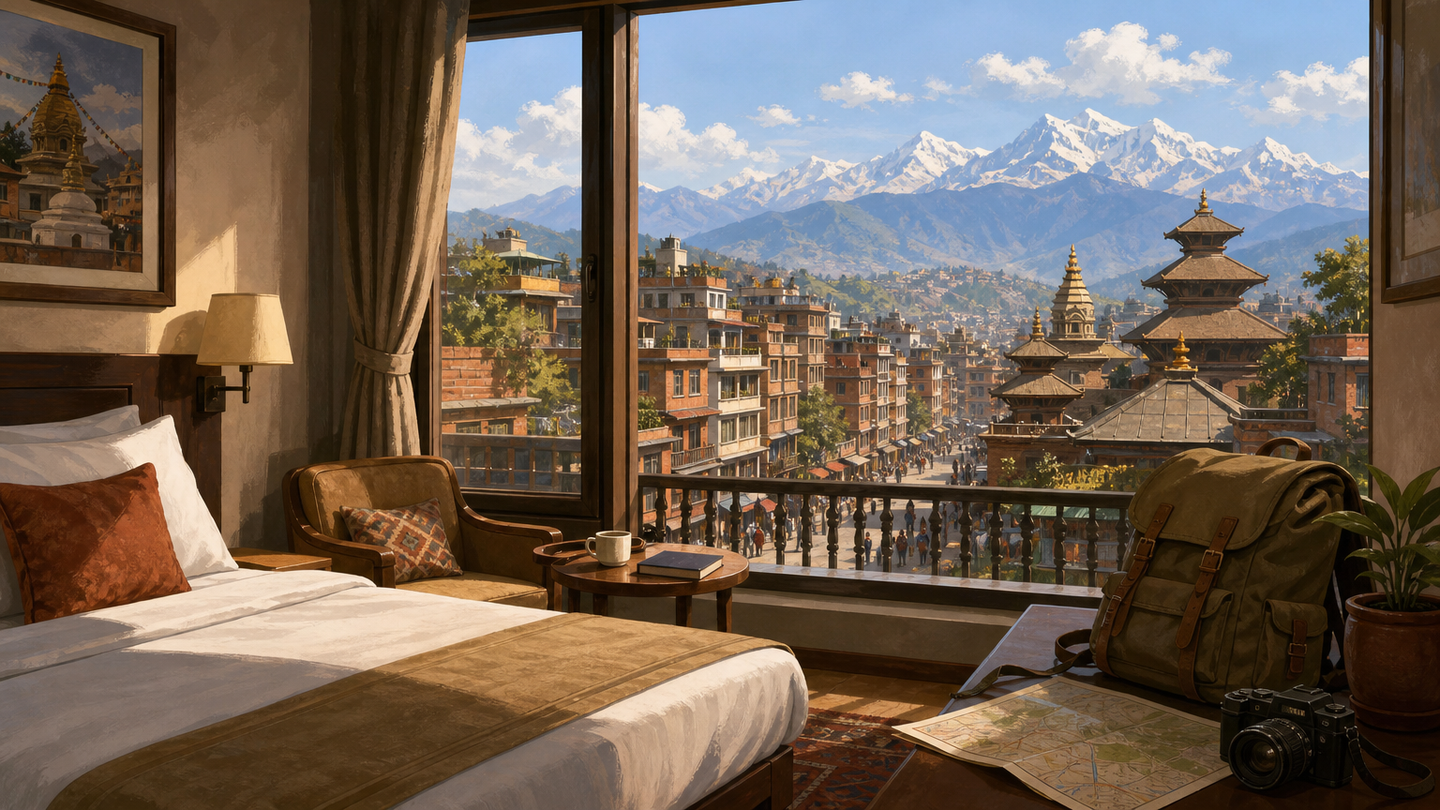
    Supporting editorial scene for How to Compare Hotels and Accommodations in Thamel, Kathmandu
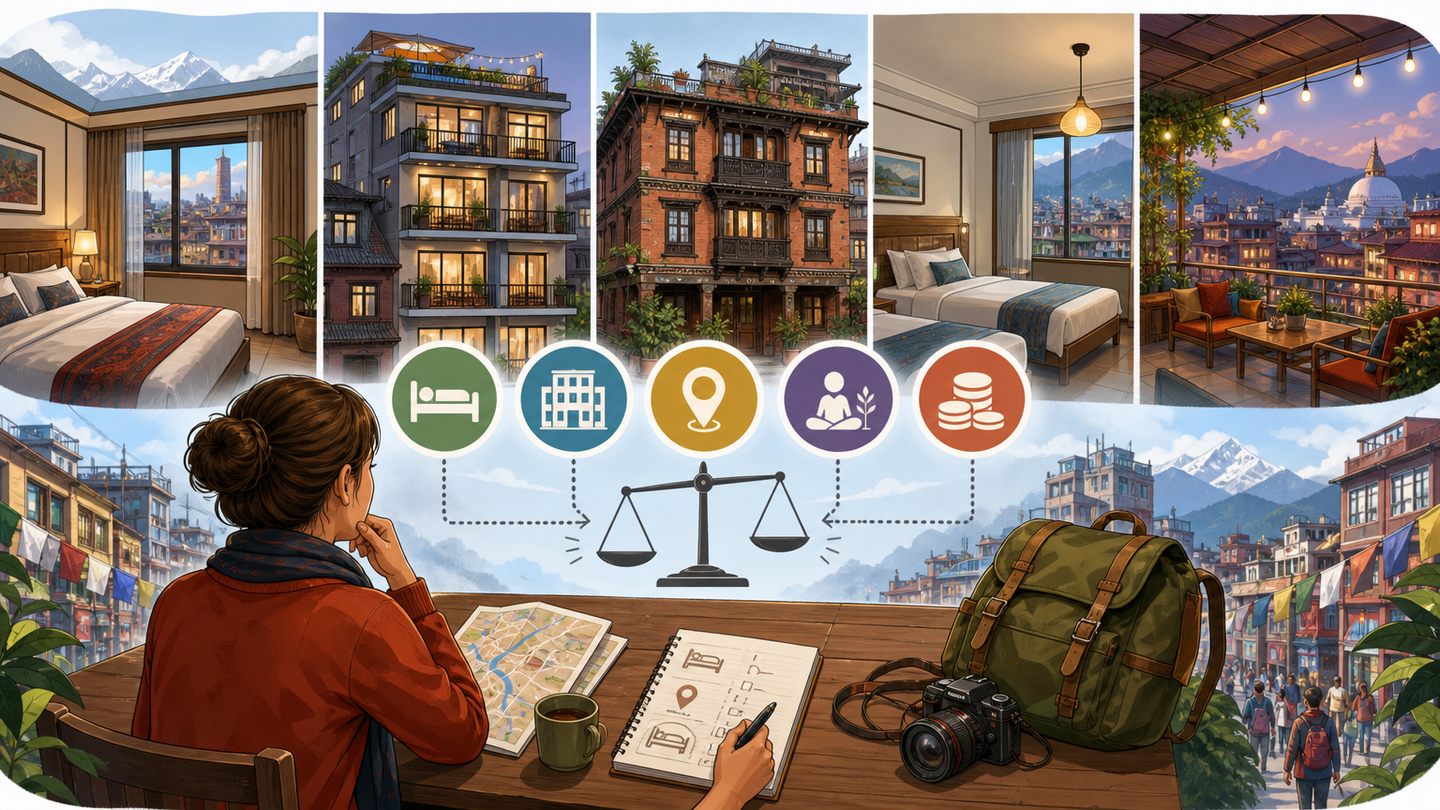
    How to Compare Hotels and Accommodations in Thamel, Kathmandu: supporting editorial illustration.

    The useful question is not which accommodation is best in general. It is which one supports your own priorities: a private place to rest, a sociable base, a simple room close to visitor services, or a lodging choice that fits a more considered style of travel. Comparing a short list through the same categories will make the differences clearer.

    Start with the stay style that suits your trip

    Begin by deciding what role the accommodation needs to play. A traveler spending most days exploring Kathmandu may value an uncomplicated base and a room that meets essential needs. Someone arriving for work, recovering from travel, or planning long periods in the room may put more weight on personal space, a quiet setting, and the features of the room itself.

    In Thamel, compare hotels, smaller lodges, and hostel-style properties as different stay formats rather than as interchangeable labels. A conventional hotel may suit travelers who want a more self-contained experience. Smaller lodging can be appealing when a modest, straightforward stay is the aim. Hostel-style accommodation can fit travelers who prioritize a shared setting or a lower-key room arrangement, but the room configuration deserves particular attention.

    Bathroom access is one of the most important distinctions. In smaller hostelries, communal bathrooms may be provided unless a private bathroom is specifically stated. Do not assume that a room is ensuite because it is described as private; a private sleeping room and a private bathroom are separate features. If this matters to you, make it a firm comparison point rather than a minor preference.

    Compare the room and building experience

    Once you have identified the appropriate stay format, compare what you will actually use. Make a simple side-by-side note for each property: room type, bed arrangement, bathroom arrangement, shared or private spaces, and any services that matter to your routine. This prevents attractive photographs or a broad property description from obscuring a detail that affects comfort every day.

    Think about privacy in layers. A private room can still sit within a busy building, while a shared-room option may be exactly right for a traveler who wants more interaction. Likewise, a private bathroom can make a meaningful difference to convenience, particularly for travelers who prefer not to coordinate their routine around shared facilities.

    Be equally clear about what is essential and what is merely pleasant. A traveler whose priority is a dependable place to sleep may accept a simpler room in exchange for location or a particular atmosphere. Another may decide that a more private room arrangement is worth making the central selection criterion. Neither choice is inherently better; the right balance depends on how you expect to use the stay.

    Weigh location against quiet and convenience

    Thamel’s identity as Kathmandu’s tourist district is part of its appeal. Staying there places you amid a concentration of visitor-oriented businesses and the activity that comes with them. For travelers who want their lodging woven into the neighborhood experience, this can be a strong reason to choose Thamel rather than treating the hotel as a retreat apart from the city.

    At the same time, a busy district asks you to consider your tolerance for activity. Look beyond the name of the neighborhood and compare the immediate setting described for each property. Consider whether you want to step directly into the liveliest part of Thamel or prefer a lodging choice that feels more removed from the district’s late-night bustle. This is not a matter of one location being universally superior; it is a tradeoff between immediacy and the kind of rest you want at the end of the day.

    The neighborhood can also work well as a base for city sightseeing. Kathmandu Durbar Square, also called Basantapur Durbar and Hanuman Dhoka, is one of the city’s notable sightseeing locations. More broadly, Kathmandu Valley includes seven monument zones within its World Heritage property. A traveler focused on cultural sightseeing may therefore favor a stay that makes moving around central Kathmandu feel manageable, while still choosing a room setup that supports recovery between outings.

    Use standards and clear questions to decide

    Accommodation labels and promotional descriptions are useful starting points, but they should not replace a direct understanding of the particular room being reserved. Nepal’s tourism framework provides for hotels, lodges, restaurants, resorts, and bars to register as tourist-standard businesses when they meet prescribed requirements, and it provides for hotel classification. The Department of Tourism also publishes hotel-standard material.

    That context can help you understand why terms such as hotel, lodge, and tourist-standard property may appear in accommodation descriptions. It does not make every individual listing identical, nor does it answer the practical question of what a specific room includes. Treat the property’s stated room details, bathroom arrangement, and booking terms as the features that determine whether the option fits your trip.

    A focused comparison is more useful than a long, unfocused list. For each contender, identify the answer to the same core questions:

    • Is the sleeping arrangement private or shared? – Is the bathroom private or communal? – Does the building atmosphere match your need for quiet, activity, or social contact? – Does the location within Thamel suit the way you want to experience the district? – Is the accommodation’s description clear about the room you are choosing?

    If an answer is vague, avoid filling in the gap with an assumption. A concise clarification can prevent a mismatch between the stay you pictured and the one you receive.

    Match the accommodation to your priorities

    For a traveler who values ease and privacy, a hotel room with a clearly stated private bathroom may be the strongest fit. For someone content with simpler arrangements, a lodge or smaller property can be appropriate when its room and bathroom details match expectations. For a traveler who wants a shared environment, hostel-style lodging may be the better match, provided the room configuration and communal facilities are comfortable for the length of stay.

    Location preferences can break a close decision. Choose a property positioned for immediate immersion in Thamel when access to the district’s visitor-oriented activity is a central part of the stay. Choose a setting that appears more removed from the busiest surroundings when rest is likely to matter more than being in the middle of the action.

    There is also room to consider how your booking connects to the place you are visiting. Choosing locally owned hotels or lodges where possible can support local livelihoods, while respectful conduct helps make tourism beneficial to both visitors and the community.

    The best Thamel accommodation is the one whose room arrangement, privacy level, setting, and travel style align without forcing you to compromise on what matters most. Before finalizing a booking, confirm the property’s current room details and terms directly, since individual accommodations can change.

    Information may contain errors, omissions, or outdated details. Confirm time-sensitive information with the relevant official or authoritative source.
  • Your First Stay in Thamel: What to Expect From Hotels and Accommodations

    Your First Stay in Thamel: What to Expect From Hotels and Accommodations

    Choosing a first place to stay in Kathmandu can feel like a major decision, especially when you want a convenient base without losing the character of the city. Thamel makes that choice easier for many visitors. As Kathmandu’s tourist district, it brings together a large concentration of hotels, lodges, and visitor-focused businesses in one lively area. It is a practical place to arrive, settle in, and begin exploring the city.

    Supporting editorial scene for Your First Stay in Thamel: What to Expect From Hotels and Accommodations
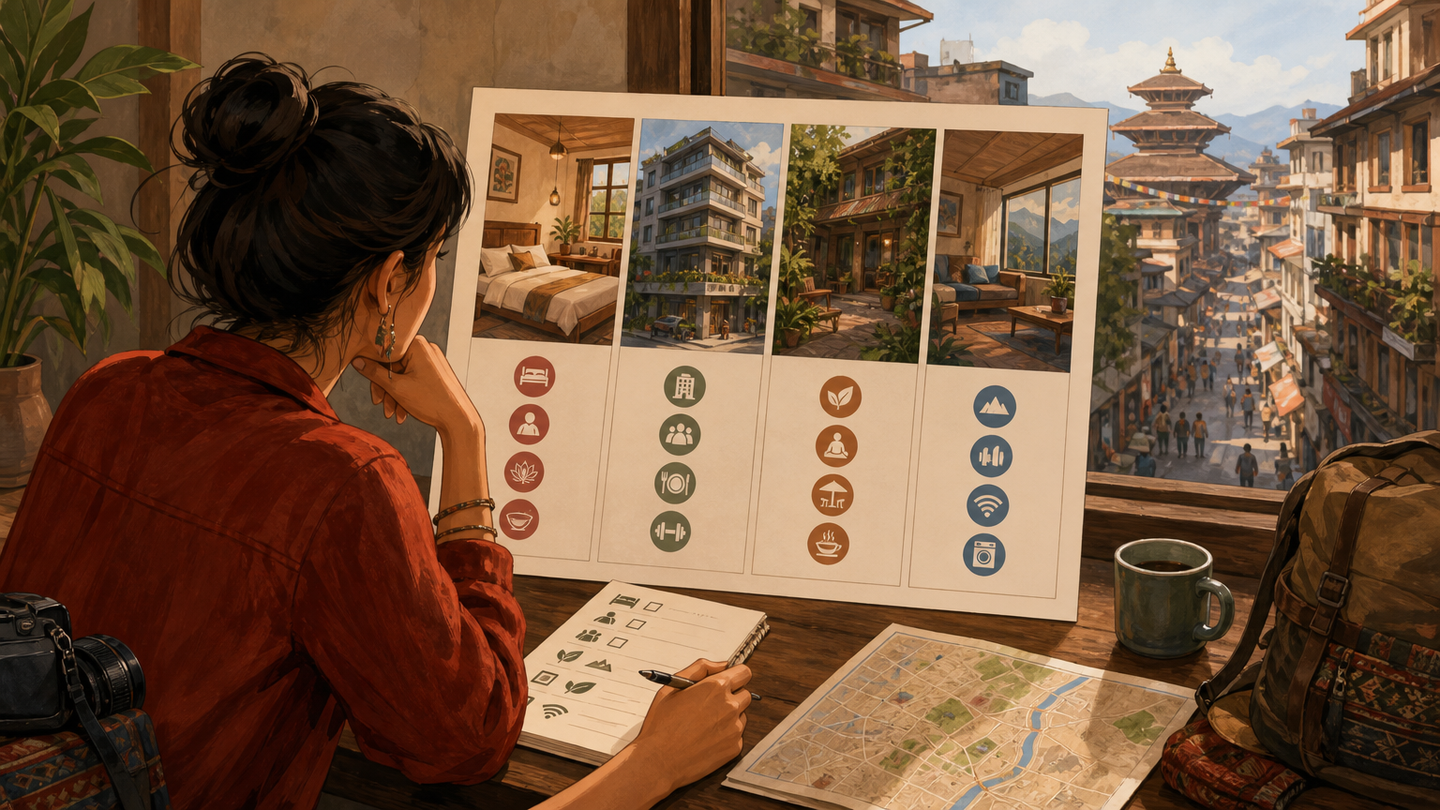
    Your First Stay in Thamel: What to Expect From Hotels and Accommodations: supporting editorial illustration.

    Thamel is not a single, uniform hotel zone. Accommodations range from smaller hostelries to more established hotels, so the best first stay depends less on finding a universally “best” property and more on knowing what matters to you: a private bathroom, a quieter room, an easy arrival, or a locally rooted place to stay.

    Why Thamel Is a Useful First Base

    Kathmandu is Nepal’s largest city as well as its political and cultural capital, and Thamel sits within its visitor-oriented heart. Staying here puts you in a district shaped around travelers’ everyday needs. The neighborhood is active late into the night, with hotels alongside restaurants and other businesses used by visitors.

    For a newcomer, that concentration can remove some friction from the first days of a trip. Rather than treating the hotel only as somewhere to sleep, think of it as your base for orienting yourself: a place to return to between outings, to ask for practical help, and to begin getting a sense of Kathmandu’s pace.

    Thamel can also work well for travelers who want city sightseeing to be part of their stay. Kathmandu Durbar Square—also called Basantapur Durbar and Hanuman Dhoka—is one of the city’s notable sightseeing locations. More broadly, the Kathmandu Valley World Heritage property includes seven monument zones, giving a stay in Kathmandu a strong cultural context beyond the immediate neighborhood.

    Before You Book: Match the Stay to Your Priorities

    Begin by deciding what “comfortable” means for your trip. A smaller lodging can be a good fit for someone who values a simple, close-to-the-neighborhood experience. A hotel may suit a traveler who wants a more conventional room setup and a clearer separation between the energy of Thamel and time spent resting.

    The room description deserves close attention. In smaller hostelries, a communal bathroom may be part of the arrangement unless a private bathroom is specifically stated. Do not assume that every room has the same facilities simply because it is in the same building. If a private bathroom matters to you, make it a non-negotiable booking detail rather than a preference you hope will work out on arrival.

    It also helps to distinguish between the neighborhood and the room. Thamel’s atmosphere is part of its appeal: it is busy, social, and active. A traveler who wants to step directly into that energy may prefer a central location. Someone who values a calmer end to the day may want to ask how a particular room is positioned within the property. The right choice is personal; lively surroundings are a benefit for some guests and a trade-off for others.

    Nepal provides for tourist-standard registration and classification of hotels when prescribed requirements are met, and hotel-standard material is published by the country’s tourism authorities. That framework is useful context, but it should not replace your own attention to the details of the room and stay you are considering.

    What to Expect When You Arrive

    Your first impression of Thamel is likely to be one of movement. This is a district built around visitors, and its many hotels and related businesses make it feel immediately practical as well as lively. Give yourself permission to slow down once you arrive. Check in, understand the layout of your accommodation, and establish the few details that will shape your comfort: your room location, bathroom arrangement, and how to reach the front desk if you need assistance.

    Accommodation in Thamel is best approached as a range rather than a single standard. “Hotel,” “lodge,” and “hostelry” can suggest different styles of stay, but labels alone do not tell you everything about the specific room. The most useful expectation is flexibility: you may find a straightforward smaller property, a more conventional hotel experience, or something in between.

    A first stay is also an opportunity to choose the kind of connection you want with the place. Locally owned hotels and lodges can be a meaningful option where they suit your needs, helping direct visitor spending toward local livelihoods. Respect for local culture belongs in the accommodation experience, too: treat shared spaces thoughtfully, be considerate of staff and other guests, and remember that a hotel is part of a living neighborhood rather than a self-contained resort.

    Questions Worth Asking Before You Commit

    A few precise questions can prevent the most common mismatch between expectation and room. Ask whether the room has a private or communal bathroom. Ask what is included with the room itself, rather than assuming that an amenity mentioned for the property applies to every room category.

    Ask about the room’s position if quiet matters to you. This is not a promise that a lively district will become silent, but it can help you choose a room that better fits your preferences. If mobility, stairs, or other access needs are important, describe them clearly and ask whether the specific room offered will work for you.

    If you are arriving tired or unfamiliar with Kathmandu, it is also sensible to ask what information the accommodation can provide at check-in. A good first-night goal is not to organize every part of the trip at once. It is to feel settled enough to explore with attention the next day.

    Finally, ask questions in a way that invites a direct answer. “Does this exact room have its own bathroom?” is more useful than “Are there bathrooms?” “Is this room suited to someone seeking a quieter night?” is clearer than asking whether the whole neighborhood is quiet. Specific questions lead to specific expectations.

    Starting Your Thamel Stay With Confidence

    Thamel rewards travelers who arrive with a simple plan and leave room for discovery. Choose accommodation based on the room features that will genuinely affect your comfort, accept that the district’s energy is part of the experience, and use your hotel or lodge as a practical foothold in Kathmandu.

    For many first-time visitors, the value of staying in Thamel is not luxury in the abstract. It is the ease of having lodging and visitor services gathered within Kathmandu’s best-known tourist district while the city’s cultural landmarks remain part of the wider experience. Verify the current details of any individual accommodation directly before making plans. With the right expectations, your first Thamel stay can feel less like an unfamiliar arrival and more like the beginning of time well spent in Kathmandu.

    Information may contain errors, omissions, or outdated details. Confirm time-sensitive information with the relevant official or authoritative source.
  • Choosing Hotels and Accommodations in Thamel, Kathmandu

    Choosing Hotels and Accommodations in Thamel, Kathmandu

    Thamel is Kathmandu’s tourist district: a compact visitor-oriented area with scores of hotels and related businesses. That concentration makes it a practical place to base a stay, but it also means that the word “accommodation” covers a wide range of experiences. A good choice begins with deciding what you need from the room, what you want from the neighborhood, and which details must be clear before you arrive.

    Supporting editorial scene for Choosing Hotels and Accommodations in Thamel, Kathmandu
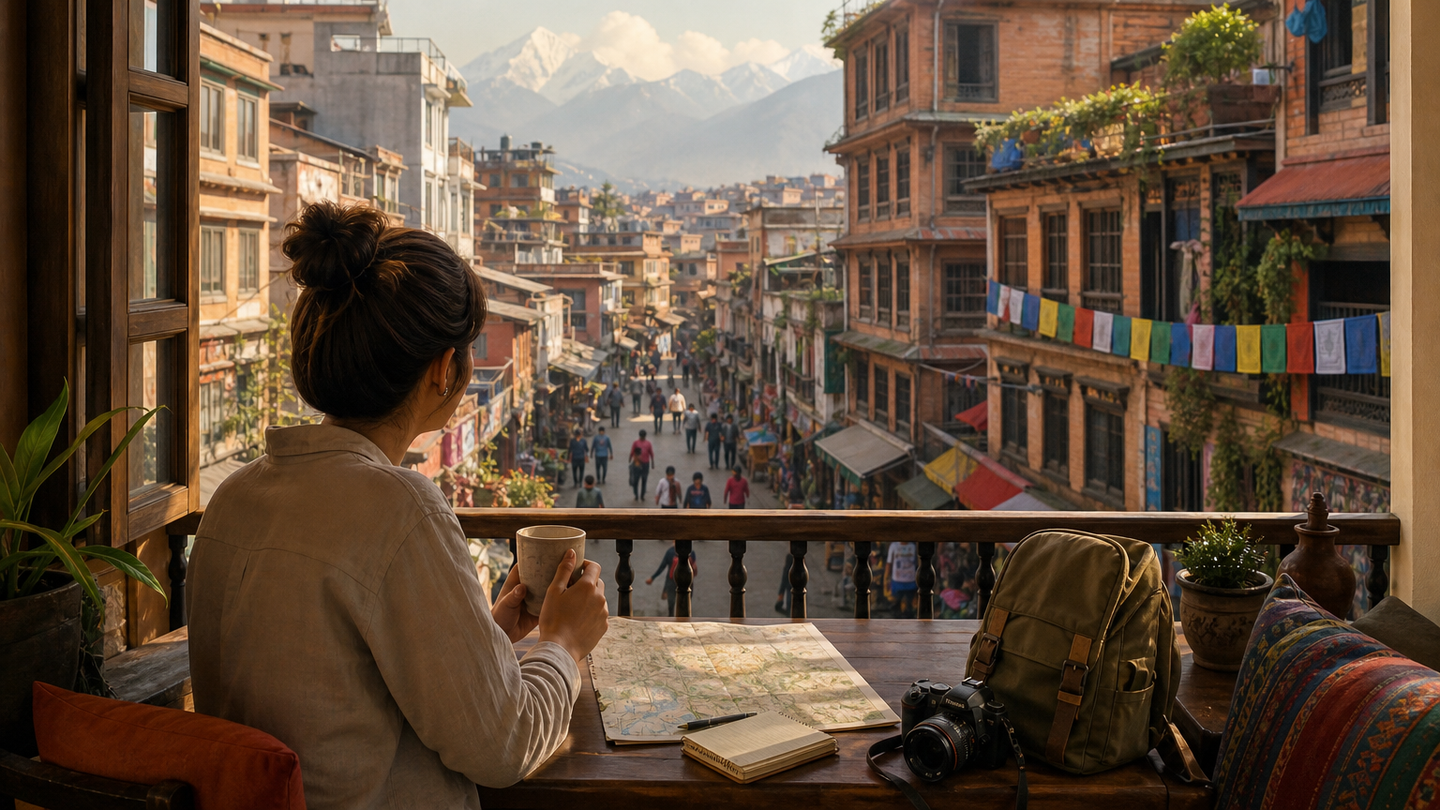
    Choosing Hotels and Accommodations in Thamel, Kathmandu: supporting editorial illustration.

    Why Thamel works as a Kathmandu base

    Kathmandu is Nepal’s largest city and its political and cultural capital. Within it, Thamel brings together lodging and visitor services in one well-known district. For travelers who want to stay in an area shaped around tourism, this can simplify the basic task of finding a place to sleep while remaining in the city.

    The neighborhood has an active character late into the night. That atmosphere may suit a traveler who values being in the middle of a lively part of Kathmandu; it may be less suitable for someone whose first priority is a quiet room. Rather than assuming every address will feel the same, treat the precise location of a property and the room’s position within it as part of the accommodation decision.

    Thamel can also serve as a starting point for exploring Kathmandu’s city sights. Kathmandu Durbar Square—also called Basantapur Durbar and Hanuman Dhoka—is a city sightseeing location, while the Kathmandu Valley World Heritage property includes seven monument zones. A stay in Thamel can therefore be paired with time devoted to the wider cultural landscape of the valley, not just the neighborhood itself.

    Choosing a stay that fits your trip

    Start by defining the role your accommodation needs to play. Some travelers mainly need a simple base between days in Kathmandu. Others may place more value on a private room, a particular bathroom arrangement, a calmer setting, or extra room to settle in. The right choice is not a universal category of hotel; it is the property whose room setup and location match the way you expect to use it.

    In Thamel, the distinction between a hotel, lodge, guesthouse, and smaller hostelry matters less than the details of the actual room. Nepal Tourism Board notes that smaller hostelries can have communal bathrooms unless a private bathroom is stated. If a private bathroom is essential, make that a non-negotiable part of the booking description rather than an assumption based on the property’s name or photographs.

    Think about your tolerance for neighborhood activity, too. A room can be convenient for nearby visitor-oriented businesses without necessarily offering the same degree of separation from the district’s nighttime energy. Ask how the room is situated—particularly if uninterrupted rest is important to your trip—and choose the setting that aligns with your priorities.

    There is also value in considering the kind of business you wish to support. Nepal Tourism Board encourages travelers, where possible, to use locally owned hotels and lodges as a way of supporting local livelihoods. This does not require a particular type of stay; it simply gives travelers one meaningful factor to include alongside comfort, room configuration, and location.

    Practical details to settle before booking

    A clear accommodation description is more useful than a broad label. Confirm the room type, the bathroom arrangement, and the facilities that are important to you personally. If accessibility, a particular sleeping arrangement, or a quieter room is central to your plans, request a direct answer before relying on it. These details can vary from one Thamel property to another.

    Nepal’s tourism framework provides for hotels, lodges, restaurants, resorts, and bars to be registered as tourist-standard businesses when they meet prescribed requirements. It also provides for hotel classification under prescribed standards, and the Department of Tourism publishes hotel-standard material. This is useful context for understanding that tourist accommodation operates within a formal framework. Still, a general standard or category should not replace checking the particular room and services you intend to use.

    Keep the practical questions focused. Establish what is included with the room, whether the bathroom is private or communal, and whether the property can meet any essential needs you have communicated. A written confirmation of the items that matter most gives you a clearer basis for selecting among stays that otherwise appear similar.

    Putting your Thamel stay to use

    Once you have chosen an accommodation that suits your priorities, use Thamel as a base rather than treating it as the whole of Kathmandu. Its visitor-oriented setting can make it a natural place to begin and end the day, while Kathmandu Durbar Square offers one city sightseeing destination beyond the district. The seven monument zones of the Kathmandu Valley World Heritage property also place a Thamel stay within a much wider cultural setting.

    The best lodging choice is one that supports the rhythm of your own visit: a room arrangement you understand, a location whose atmosphere feels appropriate, and a stay that leaves you ready to experience Kathmandu on your terms. Before finalizing any reservation, confirm the property’s current room details and booking terms directly with the accommodation.

    Information may contain errors, omissions, or outdated details. Confirm time-sensitive information with the relevant official or authoritative source.
Share with